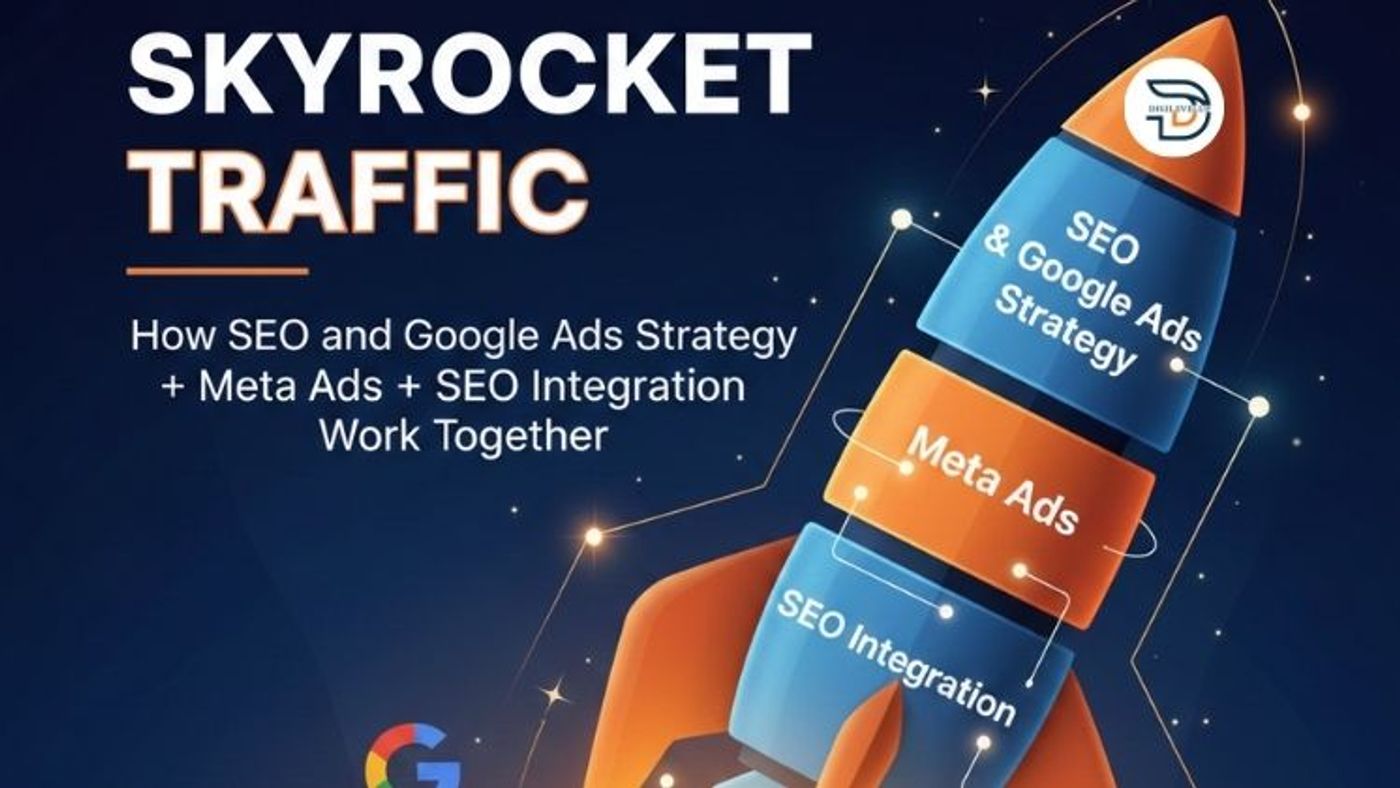
SEO and Google Ads strategy is no longer about choosing one channel over another. In today’s competitive market, businesses that combine SEO and PPC strategy, Meta Ads + SEO integration, and a strong digital marketing funnel strategy are the ones that dominate search results and maximize ROI.
If you are still debating SEO vs Google Ads, you are thinking too small. The real growth happens when you combine paid vs organic traffic into a powerful search + social paid strategy.
Understanding SEO vs Google Ads – Why You Need Both
When discussing SEO vs Google Ads, many businesses ask: which is better?
The truth is, both play different roles in your digital marketing strategy.
- SEO (Search Engine Optimization) builds long-term organic visibility.
- Google Ads provides immediate traffic and faster testing.
- Meta Ads management helps you target audiences through interest and behavior.
Instead of choosing between Google Ads vs SEO which is better, smart businesses focus on SEO and PPC working together to dominate both organic and paid results.
This approach strengthens your overall online marketing strategy and reduces dependency on one traffic source.
How SEO and PPC Strategy Increases Website Traffic
SEO and PPC strategy is one of the most powerful growth combinations in modern marketing.
Here’s how they work together:
1. Dominating Search Results
When you run Google Ads management services while ranking organically for the same keywords, you appear twice on search engines. This improves trust and increases click-through rates.
This is how you can increase website traffic fast using both paid vs organic traffic together.
2. Data-Driven Optimization
Paid campaigns help you identify:
- High-converting keywords
- Best-performing headlines
- Audience behavior
You can then use this data to strengthen your on page SEO best practices and improve your search engine marketing strategy.
This makes your entire data driven marketing strategy more effective.
The Power of Meta Ads + SEO Integration
Many businesses ignore Meta Ads + SEO integration, but this is where serious scaling happens.
Meta Ads management helps you:
- Build awareness
- Retarget website visitors
- Generate leads
When combined with SEO and social media marketing strategy, you create a full ecosystem that moves users through your marketing funnel strategy.
This approach supports a complete multi-channel marketing strategy and strengthens your customer acquisition strategy.
Building a Strong Digital Marketing Funnel Strategy
A successful digital marketing funnel strategy includes three stages:
1. Awareness (Top of Funnel)
Use:
- SEO strategy for small business
- Blog content targeting how to increase website traffic
- Social media marketing trends
- Meta Advantage campaigns
This builds brand visibility and organic reach.
2. Consideration (Middle of Funnel)
At this stage, users compare options.
Use:
- Retargeting strategies
- Paid advertising strategy
- Facebook Ads vs Instagram Ads
- Educational content around SEO vs Google Ads
This strengthens trust and improves engagement.
3. Conversion (Bottom of Funnel)
Now focus on:
- Conversion rate optimization
- Lead generation using SEO and PPC
- Google Ads campaign guide
- Performance marketing strategy
This stage ensures your ROI driven marketing strategy actually converts traffic into revenue.
Why Integrated Digital Marketing Strategy Works Better
An integrated digital marketing strategy connects:
✔ Organic search
✔ Paid search
✔ Social media
✔ Retargeting
✔ Content marketing
When you combine organic and paid marketing strategy, you reduce risks and create predictable growth.
This is the foundation of a strong full funnel marketing strategy.
Businesses that follow a structured search + social paid strategy see:
- Higher brand recall
- Lower customer acquisition cost
- Stronger conversion rates
- Long-term ranking stability
How to Combine SEO and Google Ads Strategy Effectively
Here’s a step-by-step blueprint:
Step 1: Keyword Research
Start with how to do keyword research and identify:
- High-volume keywords
- Commercial intent terms
- Long-tail variations
Use those keywords for both SEO and PPC working together.
Step 2: Create Optimized Content
Follow on page SEO best practices:
- Optimize headings
- Improve internal linking
- Focus on user intent
At the same time, test ads using Google Ads tips for beginners and refine messaging.
Step 3: Retarget & Scale
Use:
- Meta Ads e-commerce
- Meta Ads automation
- Retargeting strategies
This strengthens your multi-channel marketing strategy and improves ROI.
Role of AI in Modern SEO and PPC Strategy
AI in digital marketing is transforming how campaigns are optimized.
Platforms now use:
- Smart bidding
- Automated targeting
- Performance-based optimization
Using Meta Advantage campaigns and advanced Google Ads best practices allows your performance marketing strategy to scale faster.
AI also supports better conversion rate optimization, helping businesses reduce cost per lead.
Measuring Success in Digital Marketing Strategy
Tracking is critical.
Focus on:
- Organic traffic growth
- Paid campaign ROI
- Cost per acquisition
- Keyword ranking improvements
Use analytics to refine your data driven marketing strategy and strengthen your ROI driven marketing strategy.
Remember, marketing success isn’t about traffic alone. It’s about how effectively you convert that traffic.
Final Thoughts: Stop Choosing Between SEO vs Google Ads
The debate around SEO vs Google Ads is outdated.
In reality, combining:
- SEO and Google Ads strategy
- Meta Ads + SEO integration
- Search + social paid strategy
- Integrated digital marketing strategy
creates sustainable, scalable growth.
Businesses that rely only on organic may grow slowly.
Businesses that rely only on paid may struggle with rising costs.
But businesses that combine SEO and PPC strategy build authority, traffic, and predictable revenue.
If your goal is to truly increase website traffic, generate quality leads, and build long-term brand visibility, the solution is simple:
Don’t choose between paid and organic.
Build a powerful full funnel marketing strategy that integrates search, social, and performance marketing into one cohesive system.
That is how modern brands win.